
You never command an ant. You drag a finger across the ground to lay a pheromone trail, and the colony reads it — following, harvesting, carrying food home, and reinforcing the routes that work. Draw a good line and the ants make you look clever. Draw a bad one and you watch them wander.
In testing — AndroidTrails decay. A route you stop maintaining fades, and the colony drifts back to searching. The network is something you keep alive, not something you build once — which is what turns a drawing toy into a game.
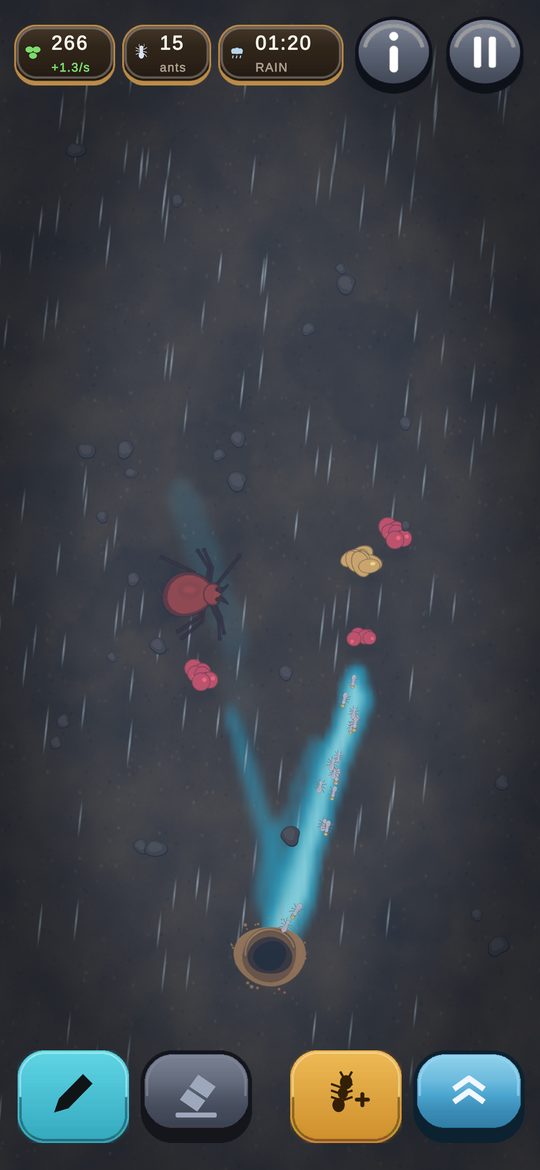
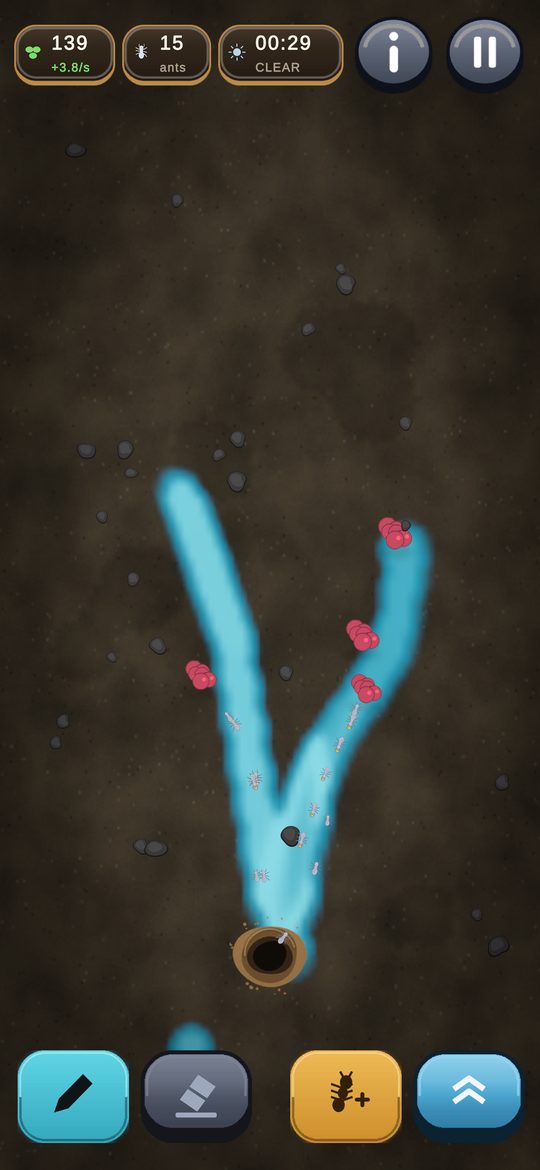
Food is a stock, not a score. Every ant eats, so more ants means more income and more burn. Hatching feels good and is almost always the wrong move right before your trails fade. Overextend and the colony eats itself.
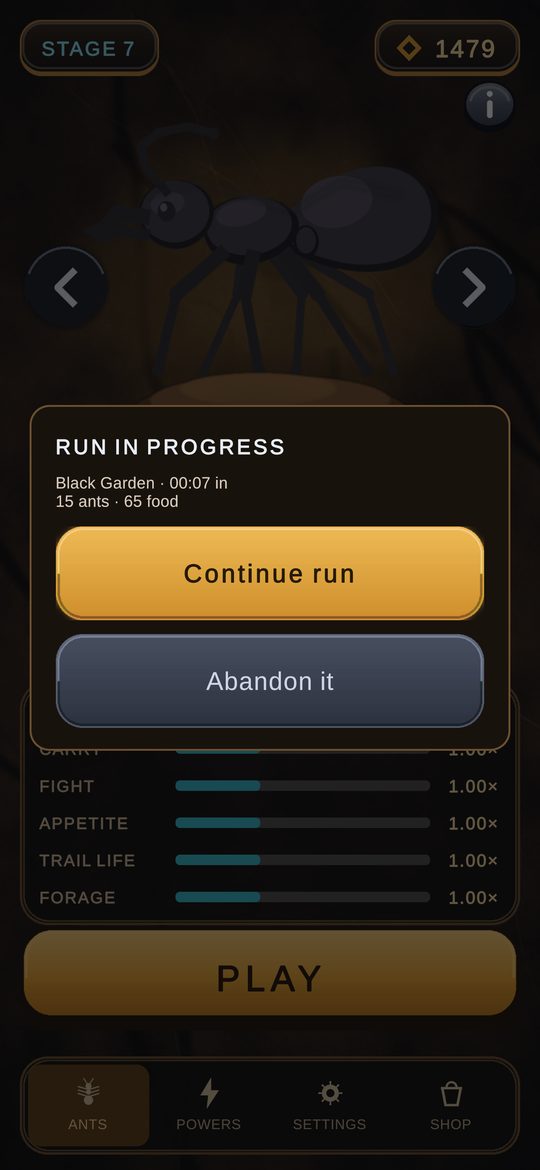
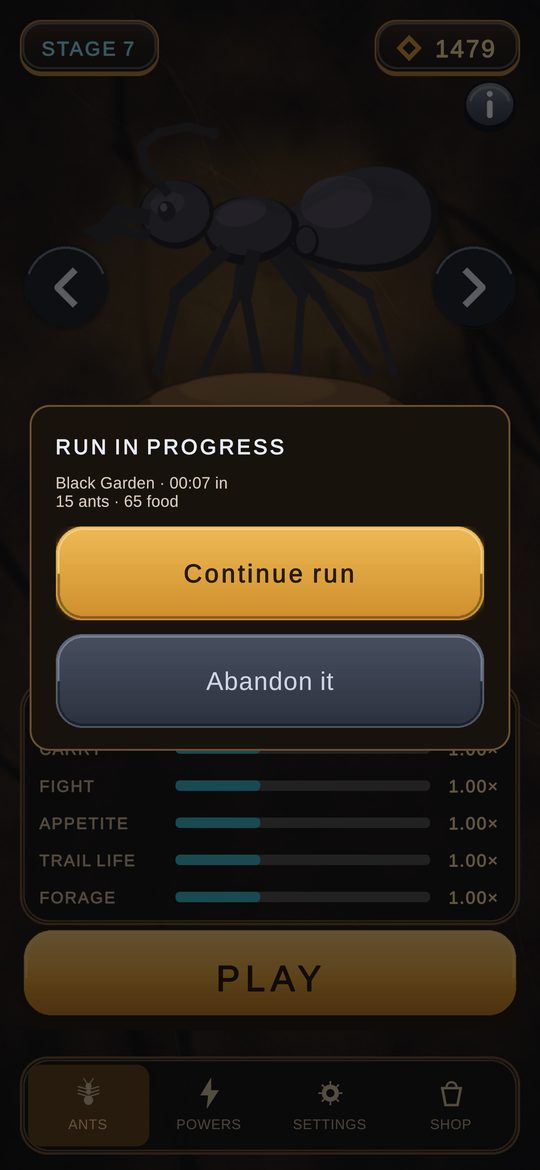
Black garden ants that farm aphids. Leafcutters that carry double and tend a fungus their ancestors have farmed for fifty million years. Army ants with no permanent nest. Honeypots whose workers become living storage jars. Each brings its own region, weather, predators, and upgrades that carry from run to run — and each comes with real natural history worth reading.
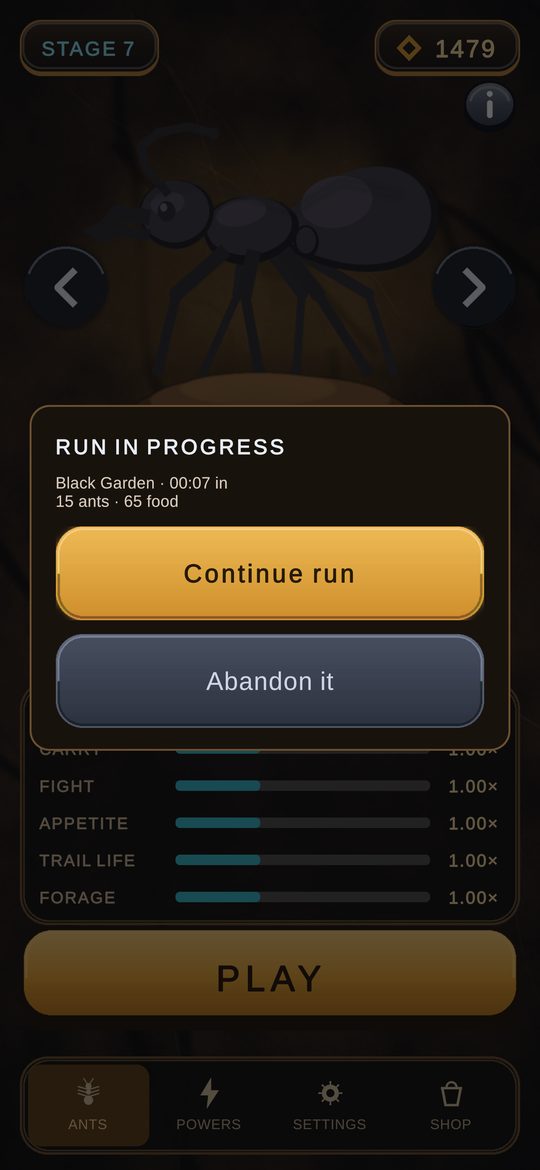
A spider parks on your busiest line and eats the ants that keep walking down it. A beetle chews through the trail itself. A raider goes for the stores. None of them can be fought directly — you have no units to command. The answer is always a better route.
No timers. No energy. No lives. Nothing that waits for you to come back or asks you to pay to keep playing. There is one advert in the whole game, on the results screen, and only if you choose to watch it.