Put a finger on the paper and drag it to where you want that point to land. The crease follows your thumb, the flap turns over, and the paper lies down exactly where you put it. One gesture — and every puzzle in the game is made of it.
In testing — AndroidEach level shows you a silhouette and gives you a sheet. While you drag, the goal lights up the moment your fold is right; let go and it lands. No guessing whether you were a pixel out, and no accepting a fold that was nearly right either.
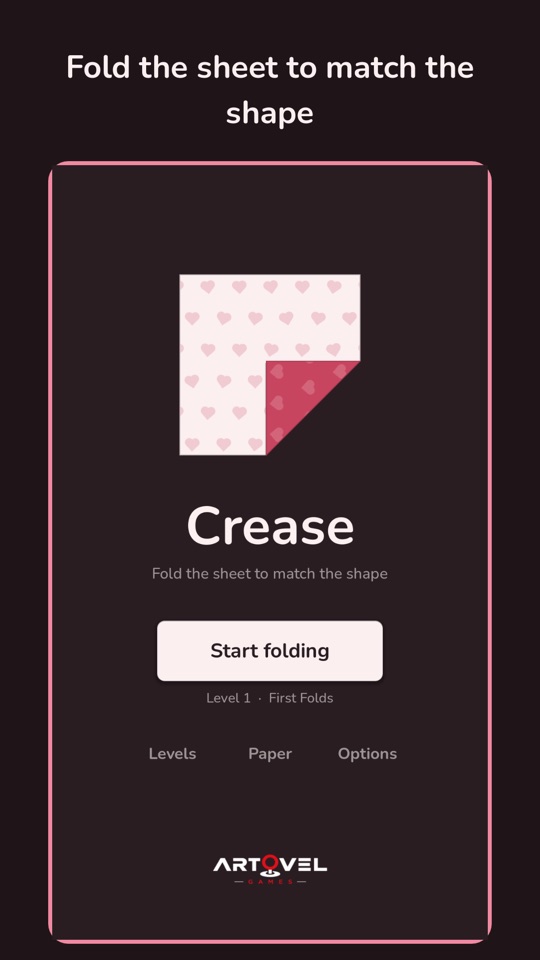
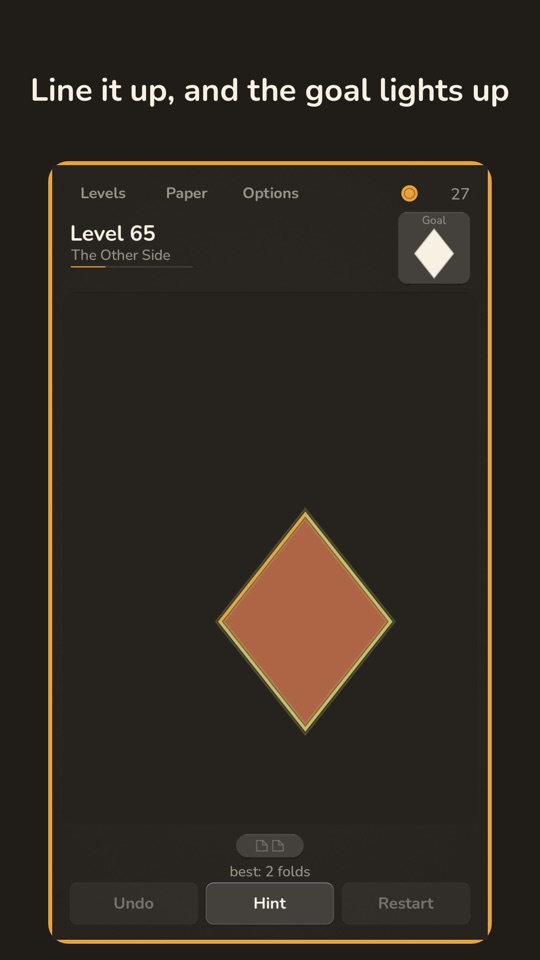
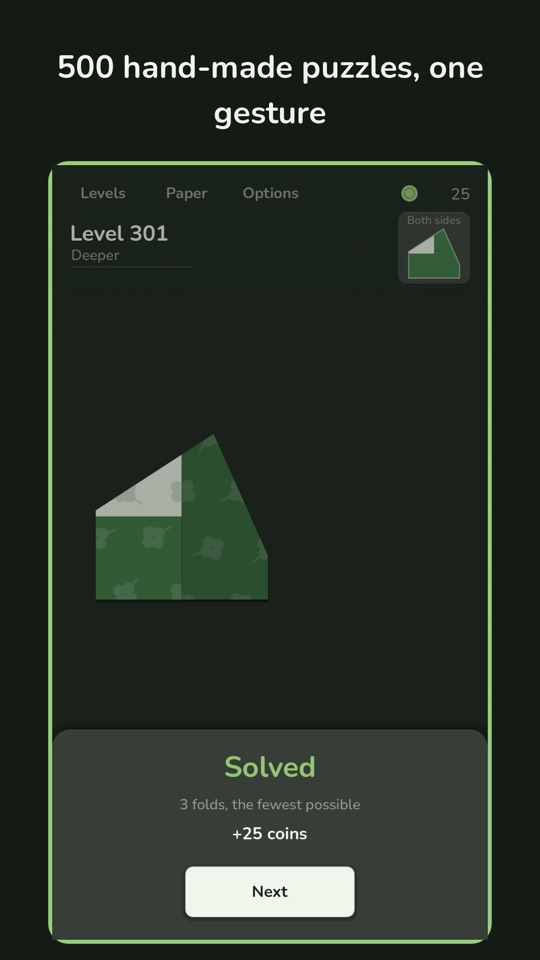
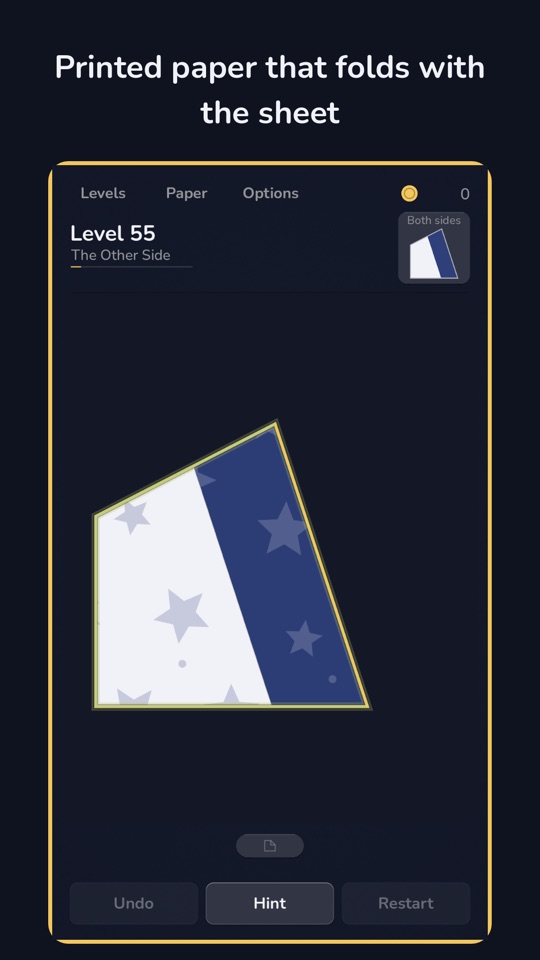
Like real origami paper, a Crease sheet is coloured on one side only. Fold a flap over and you see its back. Later puzzles ask for the colours as well as the outline — which parts should be showing their reverse when you are done. Two folds that make the same shape can leave completely different colours showing, and working out which is the puzzle.
Houses, arrows, keys, combs, crowns and staircases. Every puzzle is built backwards from its answer, so the fewest folds shown is always possible. Ten chapters climb from a single fold to four, and when you have finished them there is an endless mode waiting.
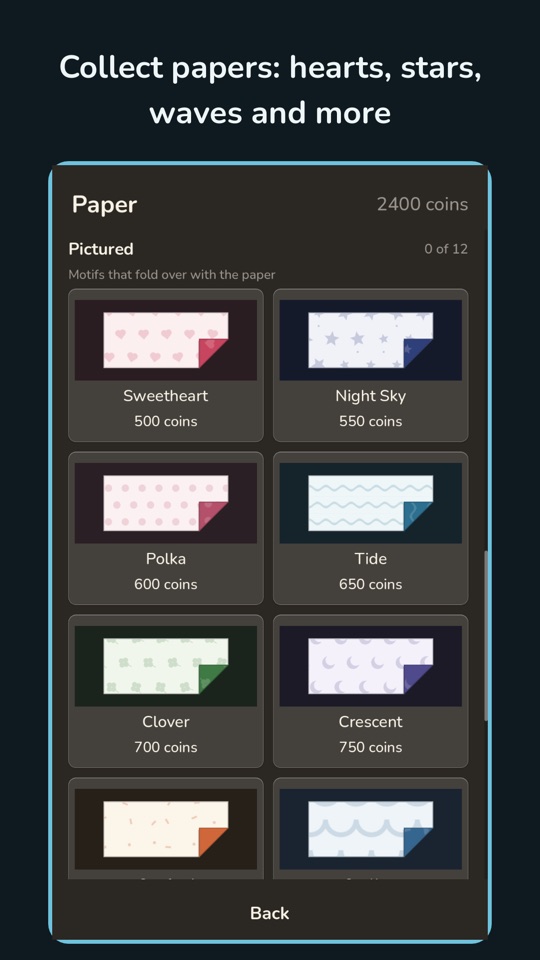
Solving earns coins, and coins buy paper: plain stocks in two colours, pinstripe and gingham, and pictured papers covered in hearts, stars, waves, moons and clover. The print is on the paper itself — on both sides — so it folds over with the sheet and shows up mirrored on every flap.
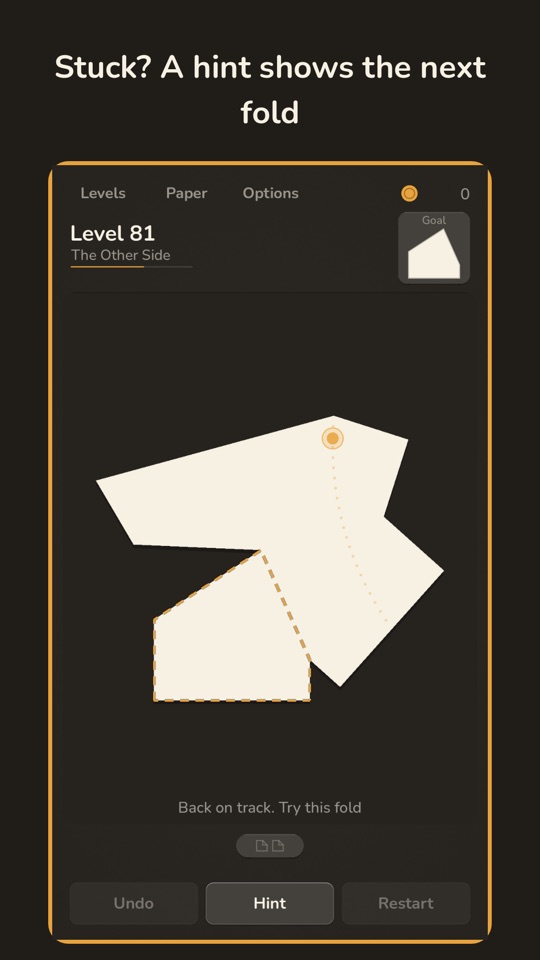
No timers. No lives. No energy. Stuck? A hint shows you the next fold, and if you have wandered off the route it takes you back to where you left it.
Crease is free and has adverts, kept out of the way on purpose. There are none at all for the first twenty levels. After that, a full-screen advert can appear between levels — never during one — at most once every few puzzles and a few minutes apart. There are no banners. Videos for a hint or to double a level's coins are only ever your choice.